Warm, porous, and distinctive — travertine's natural voids are part of its character.
Travertine forms in hot springs and limestone caves where calcium carbonate is deposited by mineral-rich water. As the water evaporates, it leaves behind layers of calcite that accumulate into travertine. The gas bubbles trapped during formation create travertine's characteristic natural voids — the pits and holes that distinguish it from other stones.
Travertine has a warm, earthy palette — creams, tans, golds, and rusts — with a distinctive pitted texture from its natural voids. It can be finished in several ways: filled (voids filled with grout or epoxy for a smoother surface), unfilled (natural texture preserved), honed (smooth matte), or tumbled (aged, rough edge). It is one of the most recognizable natural stones due to its warm color and distinctive surface character.
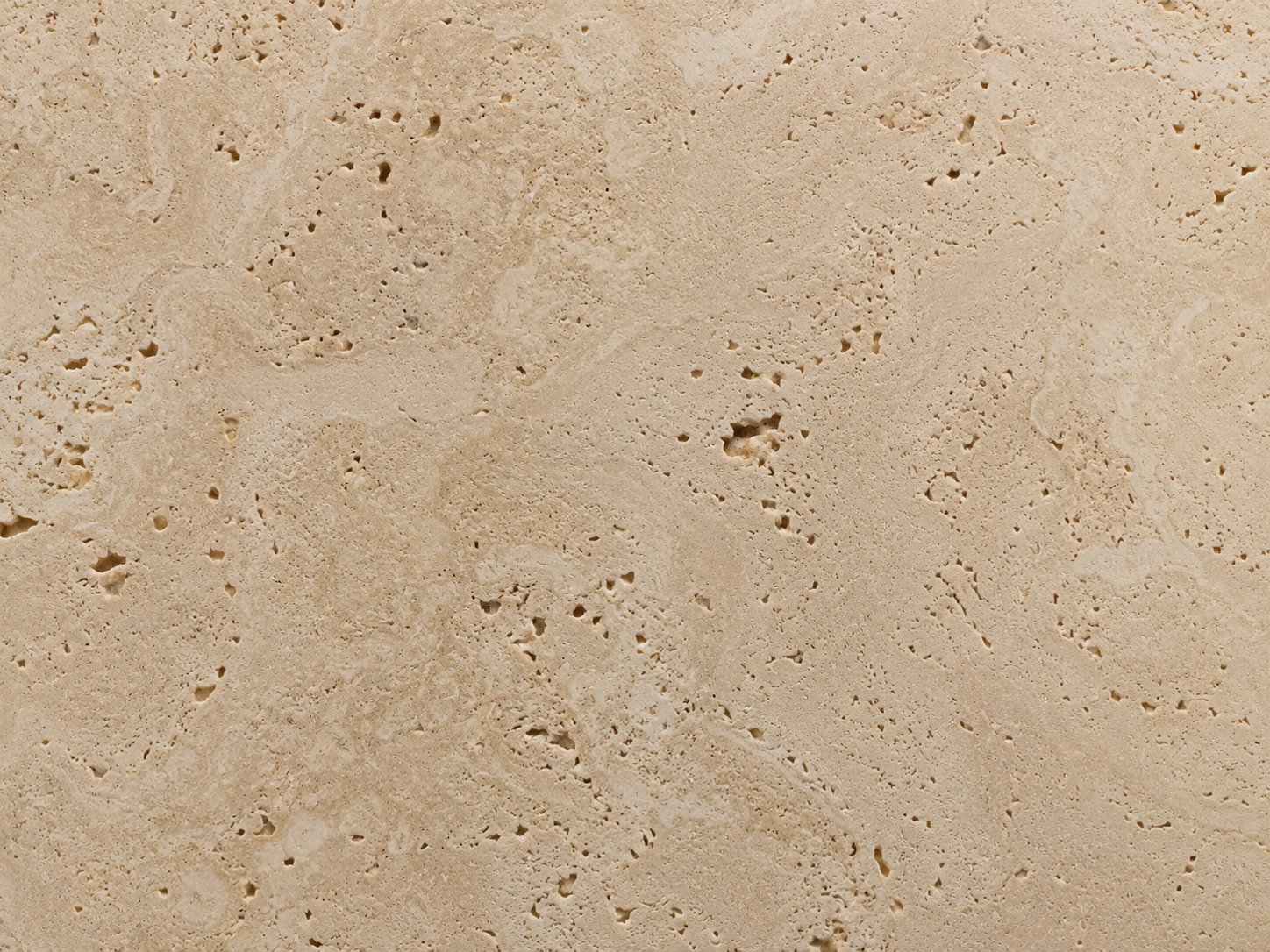
Travertine's natural voids are its defining characteristic and its primary maintenance challenge. In floors and countertops, the voids collect dirt, food, and moisture over time — requiring professional deep cleaning to fully address. In showers, the voids can harbor mineral deposits and biological growth. Its calcium-based composition means it etches from acidic products, and its porosity means it stains readily without sealing.
Travertine produces some of the most dramatic restoration results we achieve. Years of embedded dirt in the voids, mineral deposits, and surface wear are removed to reveal the stone's original warm color and character. Void filling, deep cleaning, honing, polishing, and sealing — the full process — transforms travertine that looks beyond repair into a surface that looks newly installed.
Proper care extends the life of your travertine significantly and reduces the frequency of professional restoration.
If you have travertine in your home or commercial property in Coeur d'Alene, Hayden, Post Falls, or Rathdrum — we can assess and restore it.
Tell us what you need restored — we respond within a few hours. No pressure, no obligation.