The workhorse of natural stone — durable, acid-resistant, and built to last.
Granite forms deep within the earth's crust as molten magma cools slowly over millions of years. This slow cooling process allows large mineral crystals — primarily quartz, feldspar, and mica — to form, which gives granite its characteristic speckled appearance and exceptional hardness. Unlike marble, granite does not go through metamorphism — it solidifies directly from magma.
Granite's appearance is defined by its mineral composition — typically a speckled pattern of interlocking crystals in combinations of white, grey, black, pink, and brown. Some granites have dramatic movement and color variation; others are more uniform. The surface can be polished to a high sheen, honed to a matte finish, or brushed for a textured outdoor look.
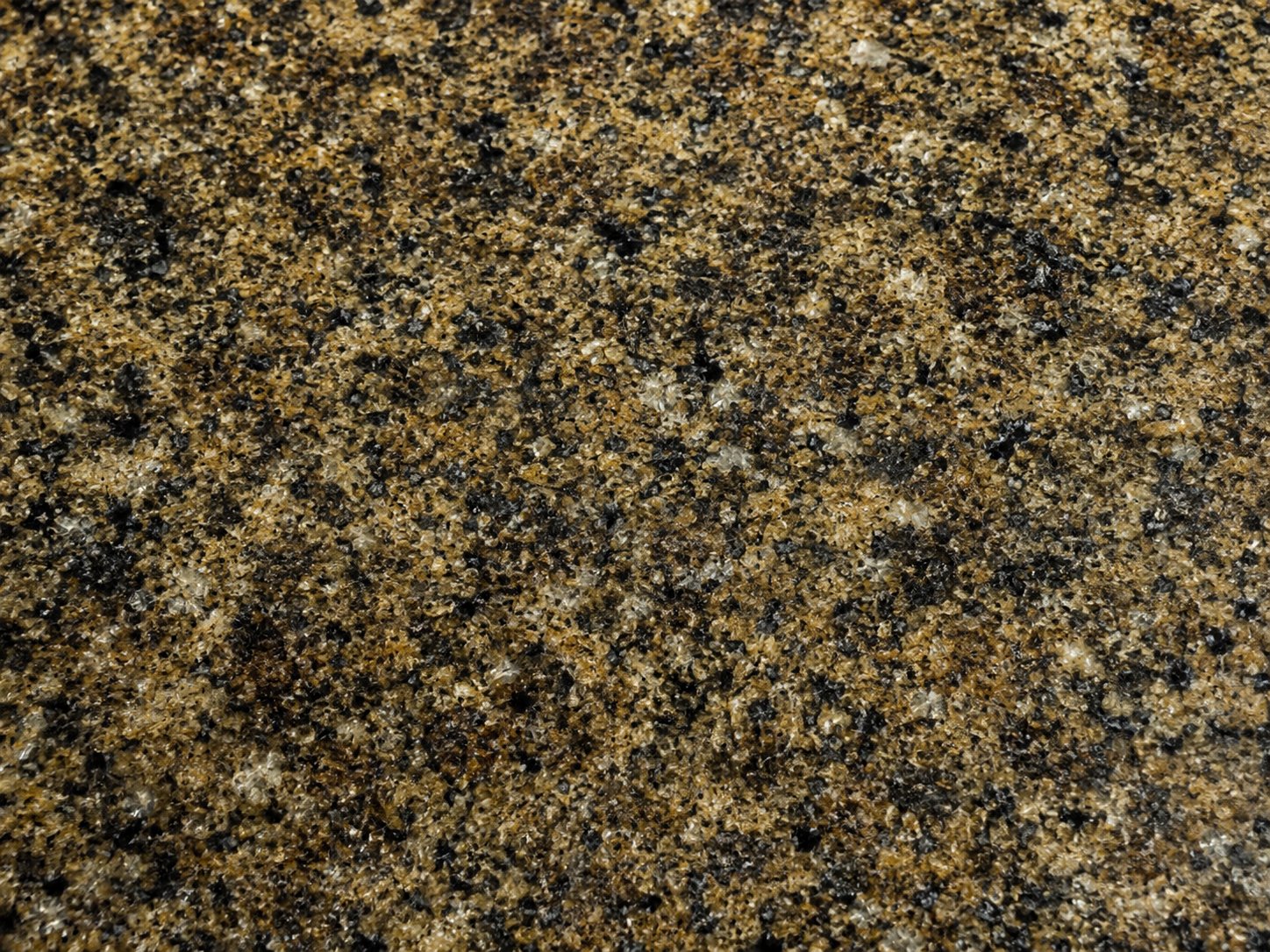
Granite is one of the most durable countertop materials available. It is acid-resistant — household spills will not etch it — and it is hard enough to resist scratching from normal kitchen use. Its primary vulnerabilities are staining when the sealer fails and gradual loss of polish over time. Both are addressed through professional cleaning, re-sealing, and periodic polishing.
Granite restoration typically involves deep cleaning to remove embedded residue and contamination, polishing to restore the surface sheen where it has dulled, and re-sealing to restore stain protection. Because granite does not etch, restoration is usually less intensive than calcium-based stones — but still benefits significantly from professional attention.
Proper care extends the life of your granite significantly and reduces the frequency of professional restoration.
If you have granite in your home or commercial property in Coeur d'Alene, Hayden, Post Falls, or Rathdrum — we can assess and restore it.
Tell us what you need restored — we respond within a few hours. No pressure, no obligation.