Naturally non-porous and acid-resistant — soapstone is unique among countertop stones.
Soapstone forms through the metamorphism of ultramafic rock — rock rich in magnesium and iron — under low temperature, high pressure conditions. The resulting stone has a very high talc content, which gives it its characteristic soft, smooth feel. Despite being very soft on the Mohs scale, soapstone is dense and non-porous — which gives it properties that no other countertop stone can match.
Soapstone has a smooth, almost silky feel — caused by its high talc content. It ranges in color from light grey to deep charcoal, often with subtle white veining. It is one of the more understated stone options, valued for its quiet elegance rather than dramatic visual impact. It darkens naturally over time, especially when treated with mineral oil, which many homeowners appreciate as part of its character.
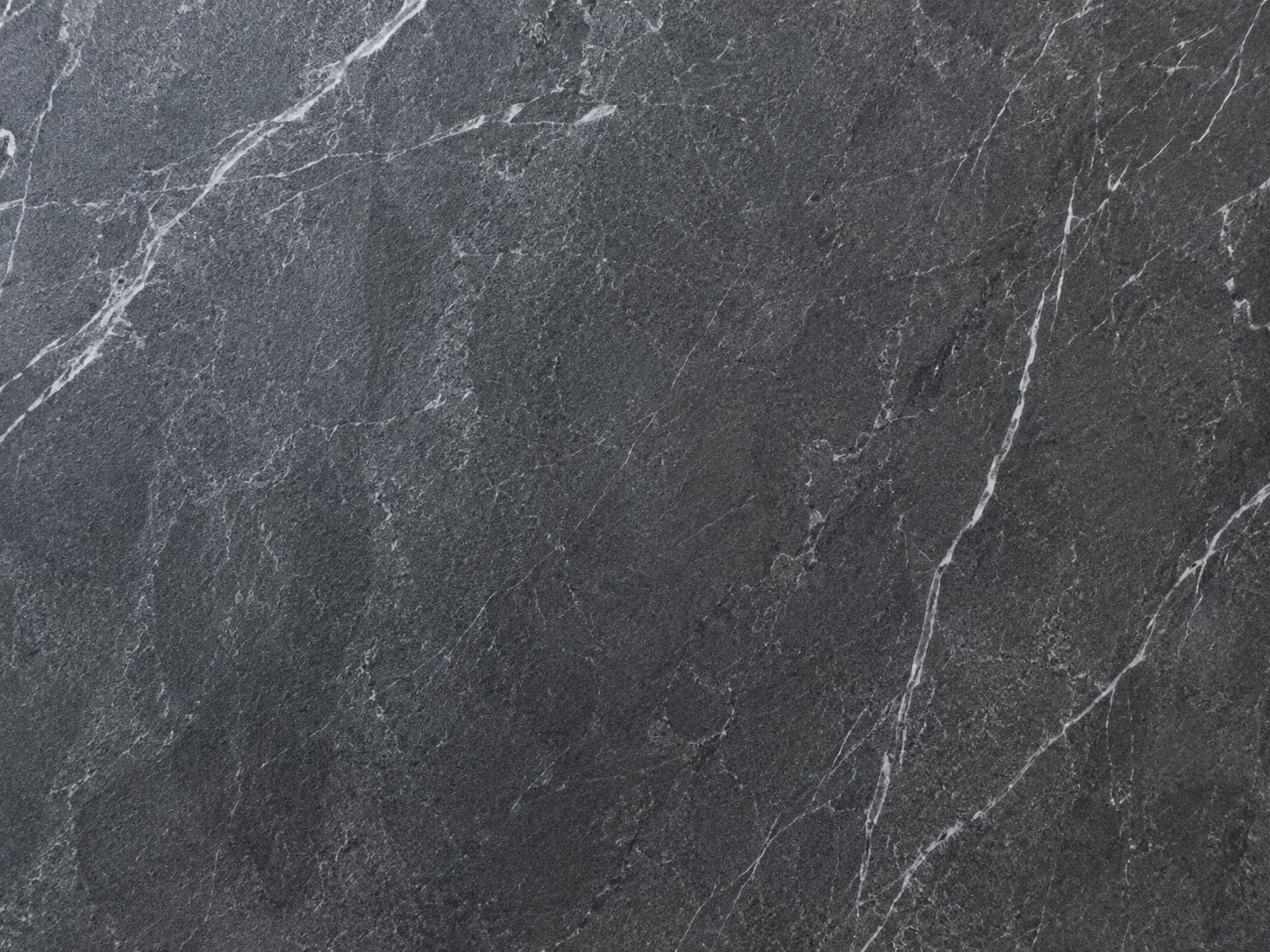
Soapstone is genuinely unique in its performance profile. It does not require sealing — it is non-porous, so liquids cannot penetrate it. It does not etch — it is not calcium-based, so acids have no effect on its surface. What it does do is scratch — it is very soft and scratches easily. However, because soapstone scratches evenly, these marks can be sanded out and the surface treated with mineral oil to restore its appearance.
Soapstone restoration is different from other stone types. Because it does not etch and does not stain, the primary restoration work involves sanding out scratches and surface damage and re-treating with mineral oil. No harsh chemicals, no aggressive abrasives — a careful sanding and oiling process restores soapstone effectively.
Proper care extends the life of your soapstone significantly and reduces the frequency of professional restoration.
If you have soapstone in your home or commercial property in Coeur d'Alene, Hayden, Post Falls, or Rathdrum — we can assess and restore it.
Tell us what you need restored — we respond within a few hours. No pressure, no obligation.