The most beloved — and most misunderstood — stone in any home.
Marble forms when limestone is subjected to intense heat and pressure deep within the earth — a process called metamorphism. The original calcite crystals recrystallize into a denser, more uniform structure that produces marble's characteristic depth and translucency. The veining that defines marble's appearance comes from minerals — iron oxide, clay, and other compounds — that were present in the original limestone and redistributed during metamorphism.
Marble ranges from pure white Carrara to deep green, black, and gold varieties. Its defining characteristic is veining — irregular lines of contrasting color running through the stone. No two slabs are identical. The surface can be polished to a mirror-like reflective finish, honed to a soft matte, or brushed for a textured feel.
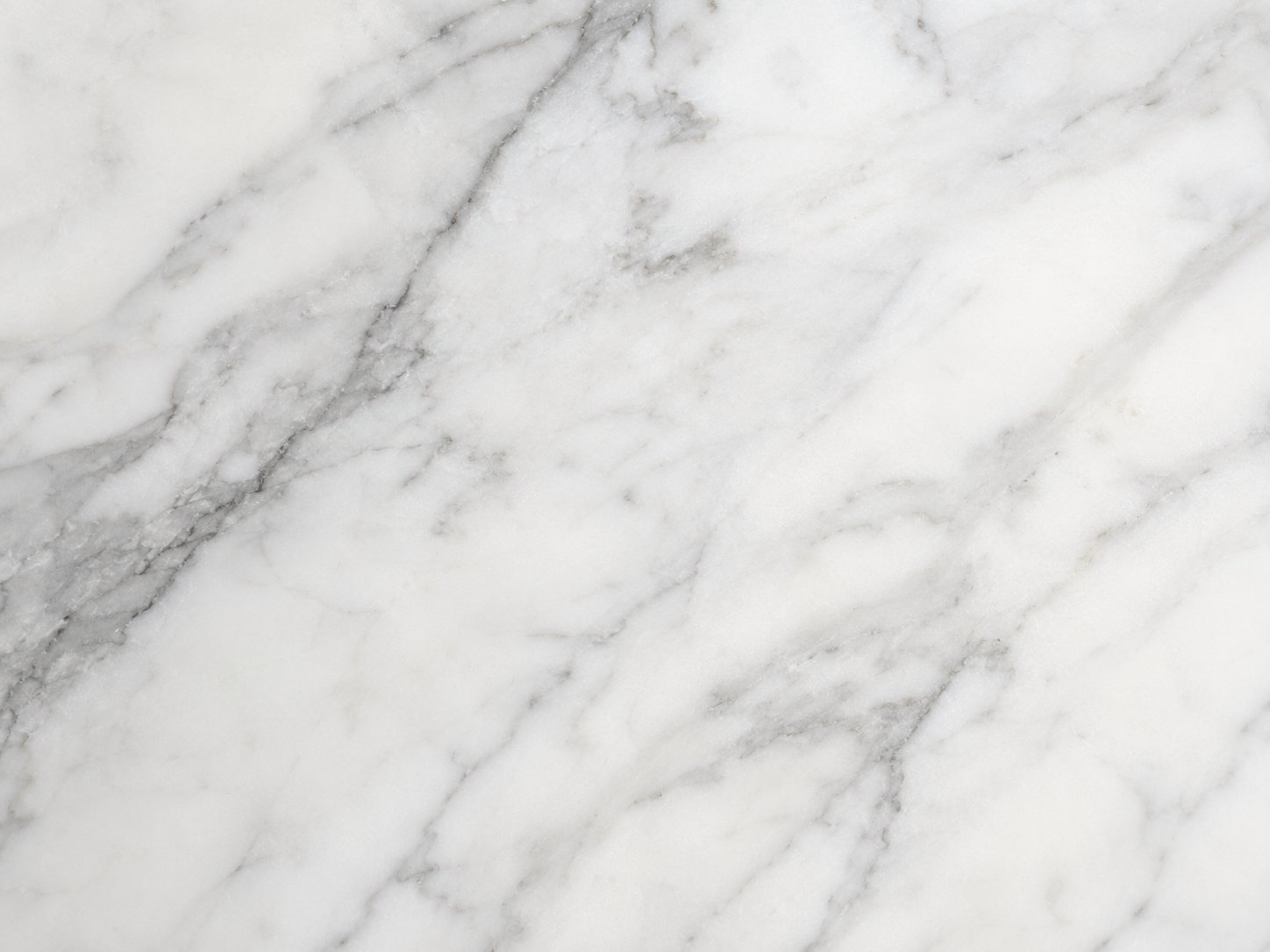
Marble is soft by stone standards — rated 3 to 4 on the Mohs scale — which means it scratches more easily than granite or quartzite. More significantly, marble is calcium-based, which makes it highly reactive to acids. Lemon juice, vinegar, wine, coffee, and many household cleaners will etch the surface — leaving dull, rough marks that are not stains and cannot be cleaned away. Only honing removes etching.
Etching is the most common marble problem we address. It is entirely correctable through professional honing and polishing — the damaged surface layer is removed and the finish rebuilt. Marble responds beautifully to restoration and can be brought back to its original appearance regardless of how long the damage has been present.
Proper care extends the life of your marble significantly and reduces the frequency of professional restoration.
If you have marble in your home or commercial property in Coeur d'Alene, Hayden, Post Falls, or Rathdrum — we can assess and restore it.
Tell us what you need restored — we respond within a few hours. No pressure, no obligation.