Rich, dark, and naturally textured — slate is silica-based and acid-resistant.
Slate forms when shale — a fine-grained sedimentary rock — is subjected to low-grade metamorphism. The clay minerals in shale recrystallize into flat, parallel layers of mica and other minerals, giving slate its characteristic ability to split into thin, flat sheets. This foliation is what creates slate's natural cleft texture.
Slate has a naturally cleft, irregular surface that is distinctive among stone types. It ranges in color from deep charcoal and black to grey, green, purple, and rust. The natural texture provides excellent traction — making it popular for floors, entryways, and exterior applications. It does not have the veining of marble or the sparkle of granite — its beauty comes from its rich, deep color and natural texture.
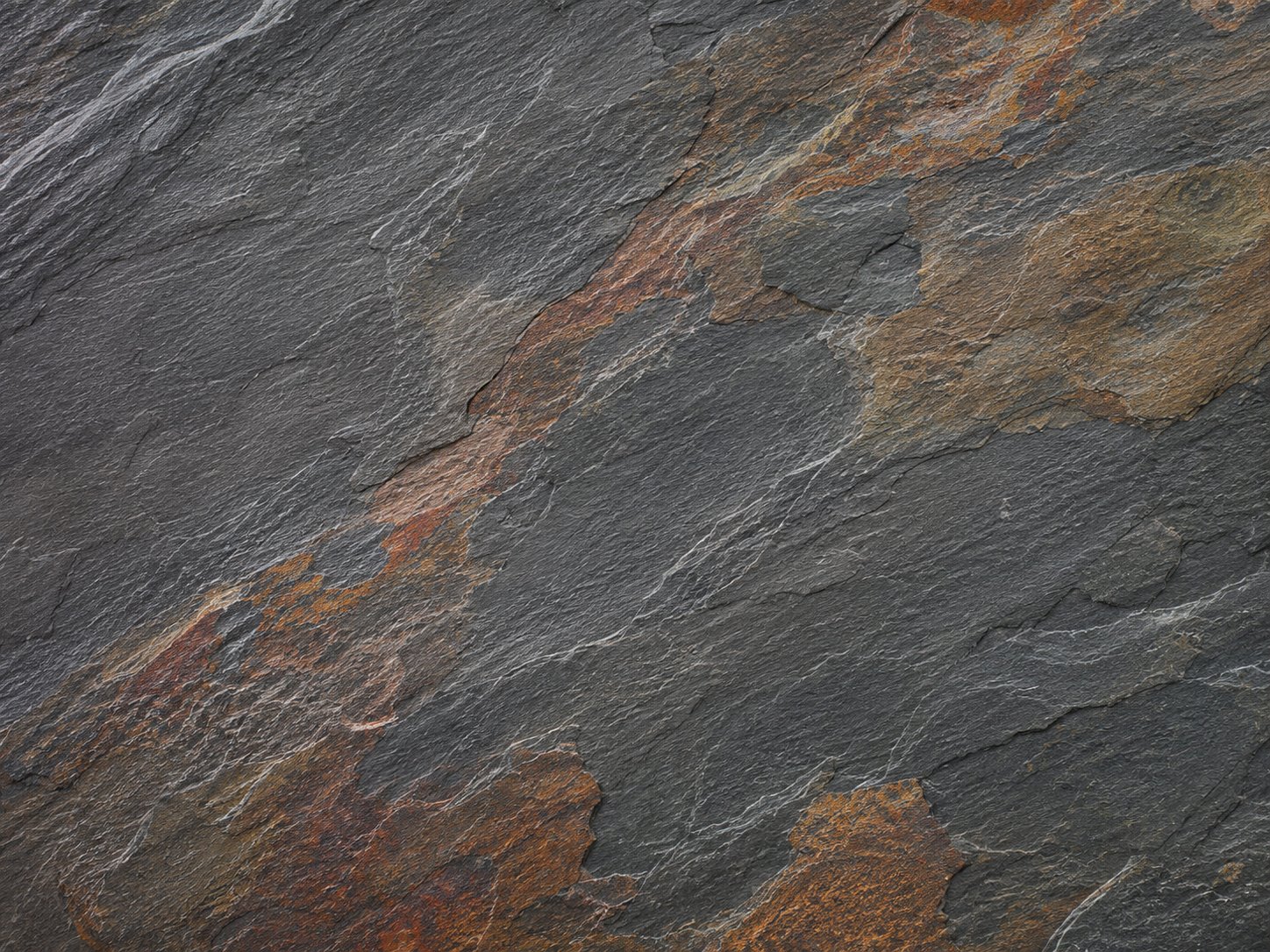
Slate is silica-based and does not etch from household acids — a practical advantage over calcium-based stones. Its natural cleft texture traps dirt and debris more readily than a smooth surface, requiring more thorough cleaning. Slate can delaminate — split along its natural layers — if subjected to freeze-thaw cycles without proper sealing. In North Idaho's climate, exterior slate requires appropriate sealing before winter.
Slate restoration focuses primarily on deep cleaning — removing the dirt, grease, and product residue that accumulates in its textured surface — and sealing to protect and enhance its rich color. Honing is less common on slate than on polished stones, but can be used where the surface has been damaged or worn unevenly.
Proper care extends the life of your slate significantly and reduces the frequency of professional restoration.
If you have slate in your home or commercial property in Coeur d'Alene, Hayden, Post Falls, or Rathdrum — we can assess and restore it.
Tell us what you need restored — we respond within a few hours. No pressure, no obligation.