Natural stone — not to be confused with engineered quartz. Harder, more durable, and genuinely beautiful.
Quartzite forms when sandstone — a sedimentary rock composed primarily of quartz grains — is subjected to heat and pressure during metamorphism. The quartz grains fuse together into an extremely dense, hard material. True quartzite is one of the hardest natural stones available, rating 7 or higher on the Mohs scale.
Quartzite is often compared to marble in appearance — it can have dramatic veining and a refined, elegant look — but it is physically much harder and more durable. Colors range from white and cream to grey, gold, and pink. Because it is frequently mistaken for marble and sold under marble-sounding trade names, it is important to confirm what stone you actually have before choosing a care approach.
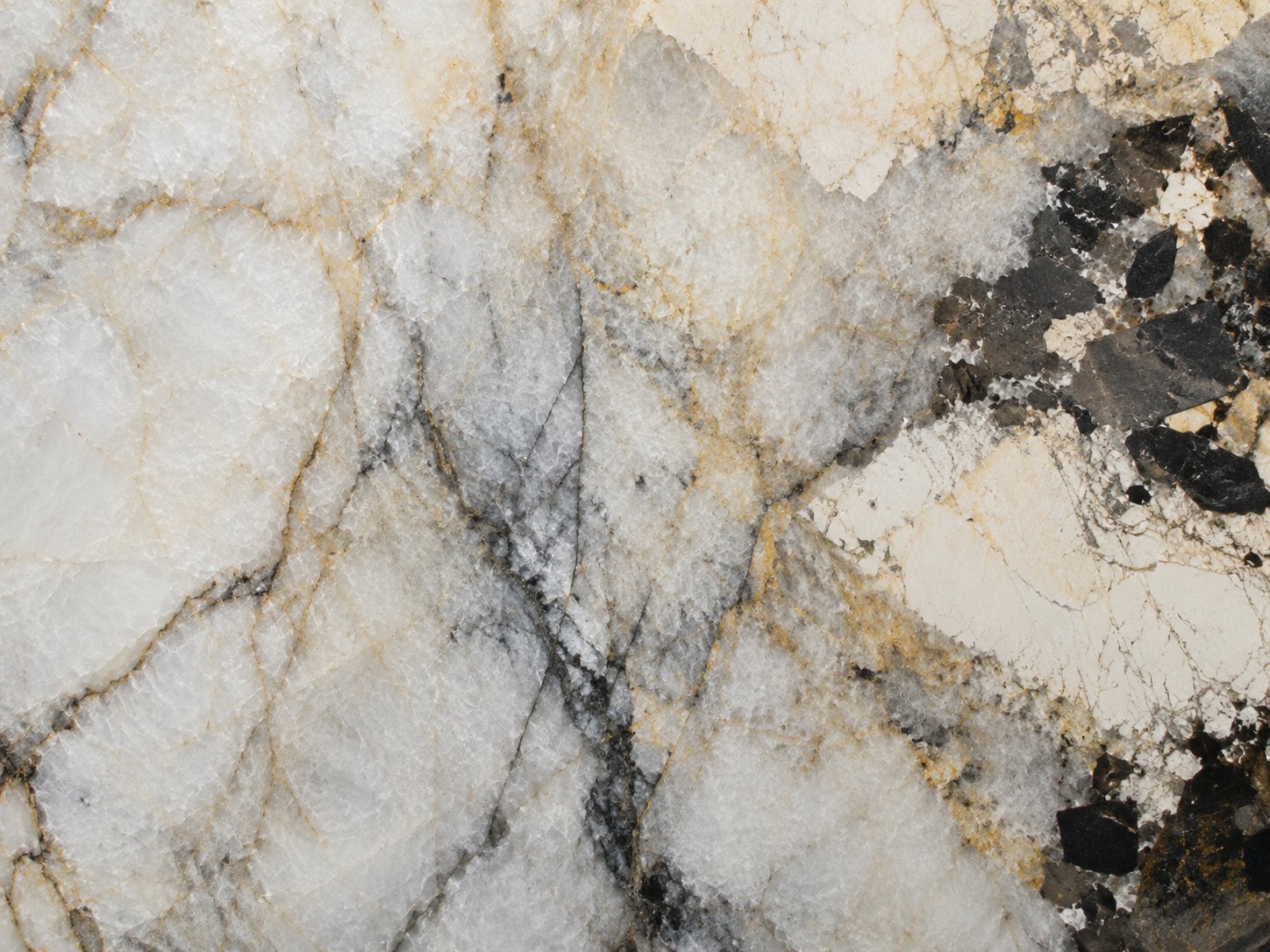
True quartzite is extremely resistant to scratching and does not etch from household acids — making it a highly practical countertop material that looks like marble but performs closer to granite. It does require sealing to resist staining, as its porosity varies by slab. Some stones sold as quartzite are actually softer and may show etching — if you are unsure what you have, we can assess it during an evaluation.
Quartzite restoration involves professional cleaning, light honing where surface wear has occurred, polishing to restore clarity, and re-sealing. Because quartzite is so hard, it requires appropriate diamond abrasives and technique — it does not respond to the same process used on softer calcium-based stones.
Proper care extends the life of your quartzite significantly and reduces the frequency of professional restoration.
If you have quartzite in your home or commercial property in Coeur d'Alene, Hayden, Post Falls, or Rathdrum — we can assess and restore it.
Tell us what you need restored — we respond within a few hours. No pressure, no obligation.