Residential Countertops Showers Floors Fireplaces Headstones Chip & Crack Repair Scratch & Etch Removal Calcium & Hard Water Removal Stone Guide Marble Granite Travertine Quartzite Limestone More Maintenance Plans About Get a Free Quote Learn Stone Types Blog Locations
Stone Education Guide · Elite Tile & Stone

Sandstone
Natural Stone

Among the most porous and fragile natural stones — sandstone requires the most conservative care.

At a Glance

Sandstone Properties

Classification
Silica-based Sedimentary Rock
Hardness
Mohs 6–7 — Hard (but highly variable)
Acid Sensitivity
Low to Medium — composition varies significantly by source
Color Range
Buff, tan, red, brown, grey — warm and earthy, often layered
Primary Origins
USA, India, Australia, UK, Germany
Common Uses
Historic headstones, Exterior cladding, Garden features, Decorative applications

What Is
Sandstone?

Sandstone forms from sand grains — primarily quartz — that have been compacted and cemented together by minerals deposited between the grains by groundwater. The strength and porosity of sandstone varies enormously depending on the cementation mineral and the tightness of the grain packing. Some sandstones are very hard and dense; others are soft and crumble easily. This variability makes sandstone assessment before restoration especially important.


Sandstone has a warm, grainy texture that reflects its sand origins. Colors range from buff and tan to red, brown, and grey depending on the iron and mineral content of the original sand. It often has a layered or banded appearance reflecting the original sand deposits. Historic headstones made from sandstone frequently show significant weathering — the rounded edges and softened lettering characteristic of very old memorials.
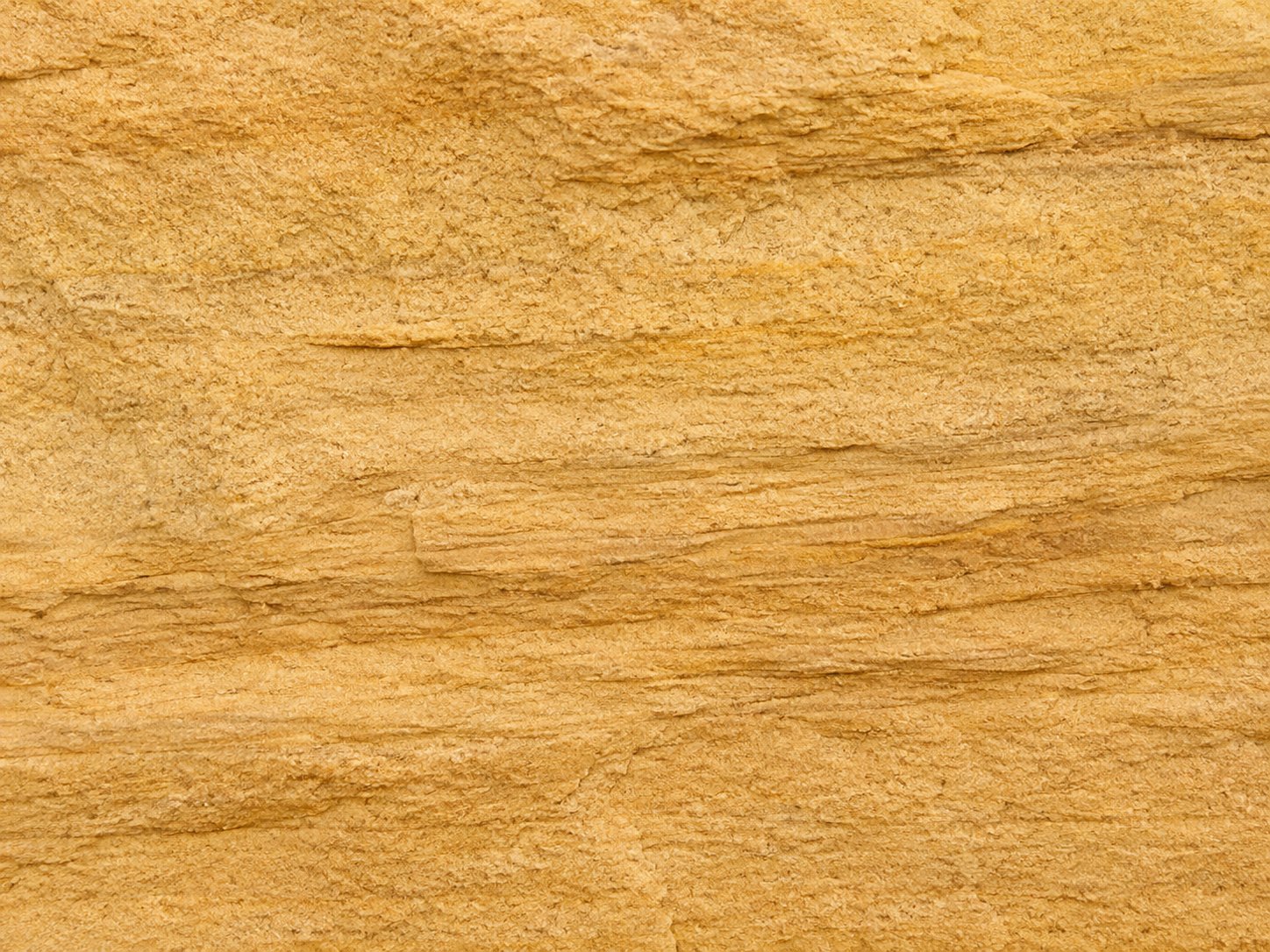
Sandstone slab close-up — Elite Tile & Stone
In Your Home

How Sandstone
Performs

Sandstone is highly porous — it absorbs liquids readily and is particularly susceptible to biological growth and environmental staining. In North Idaho's climate, freeze-thaw cycles can be physically damaging to softer sandstones — water penetrates and expands as it freezes, causing surface spalling. Old sandstone headstones from the 19th century may be in fragile condition that limits what restoration is appropriate.

Our Restoration Approach

Sandstone restoration — particularly of historic memorials — requires the most conservative approach we apply to any stone. The goal is preservation rather than dramatic restoration. We use the gentlest appropriate cleaning chemistry, avoid mechanical abrasion on fragile surfaces, and communicate honestly about what the stone can support before beginning. Improving readability and removing biological growth is the primary goal; returning a 150-year-old sandstone headstone to new condition is not realistic and attempting it could cause irreversible damage.

How to Care for It

Sandstone Maintenance Tips

Proper care extends the life of your sandstone significantly and reduces the frequency of professional restoration.

Restoration Services

We Restore Sandstone
Throughout North Idaho

If you have sandstone in your home or commercial property in Coeur d'Alene, Hayden, Post Falls, or Rathdrum — we can assess and restore it.

Have Sandstone That
Needs Attention?

Free in-home assessment — we'll evaluate your sandstone and tell you exactly what we can do.

Get a Free Quote
Common Questions

Sandstone Questions

Sandstone is widely used outdoors for patios, walls, and walkways and holds up well, though it's more porous and softer than granite or bluestone. Sealing is important for sandstone, especially in North Idaho's freeze-thaw climate.
Yes. Professional cleaning removes organic staining, algae, and weathering, and sealing protects the surface going forward. Sandstone's warm tones come back nicely after restoration.
Some sandstone naturally sheds surface grains as it weathers, especially softer varieties. A consolidating sealer can stabilize the surface and reduce shedding. We assess the specific stone to recommend the right product.
Yes — sandstone is porous and benefits significantly from sealing every 1 to 3 years depending on exposure. Exterior sandstone in our climate needs more frequent attention than interior. Sealing prevents staining and slows weathering.
Free Quote

Request Your Free Quote

Tell us what you need restored — we respond within a few hours. No pressure, no obligation.

Or call 208-449-9455 — Mon–Sat 7am–5pm.

Get a Free QuoteFill out the form
Call 208-449-9455Talk to us now
📞