Residential Countertops Showers Floors Fireplaces Headstones Chip & Crack Repair Scratch & Etch Removal Calcium & Hard Water Removal Stone Guide Marble Granite Travertine Quartzite Limestone More Maintenance Plans About Get a Free Quote Learn Stone Types Blog Locations
Stone Education Guide · Elite Tile & Stone

Quartz
Natural Stone

Not a natural stone — engineered quartz is a manufactured surface with distinct properties and limitations.

At a Glance

Quartz Properties

Classification
Engineered Surface (ground quartz + resin binder)
Hardness
Mohs 7+ — Very Hard
Acid Sensitivity
Low — does not etch, but resin can be damaged by strong chemicals
Color Range
Any color — white, grey, black, blue, and more — manufactured to specification
Primary Origins
Manufactured globally — Cambria (USA), Silestone (Spain), Caesarstone (Israel)
Common Uses
Countertops, Vanities, Commercial surfaces

What Is
Quartz?

Engineered quartz is not a natural stone — it is a manufactured product typically composed of approximately 90 to 95 percent ground quartz crystals bound together with polymer resins and pigments. The result is a very hard, non-porous surface that mimics the appearance of natural stone while offering greater consistency and uniformity. Because it is manufactured, every slab can be made to look identical — which is both its advantage and what distinguishes it from natural stone.


Engineered quartz can be manufactured to resemble almost any natural stone — white marble, grey concrete, black granite, and more. It does not have the natural variation of real stone — the pattern repeats across slabs — but modern manufacturing has made some varieties visually convincing. It is available in an enormous range of colors and patterns.
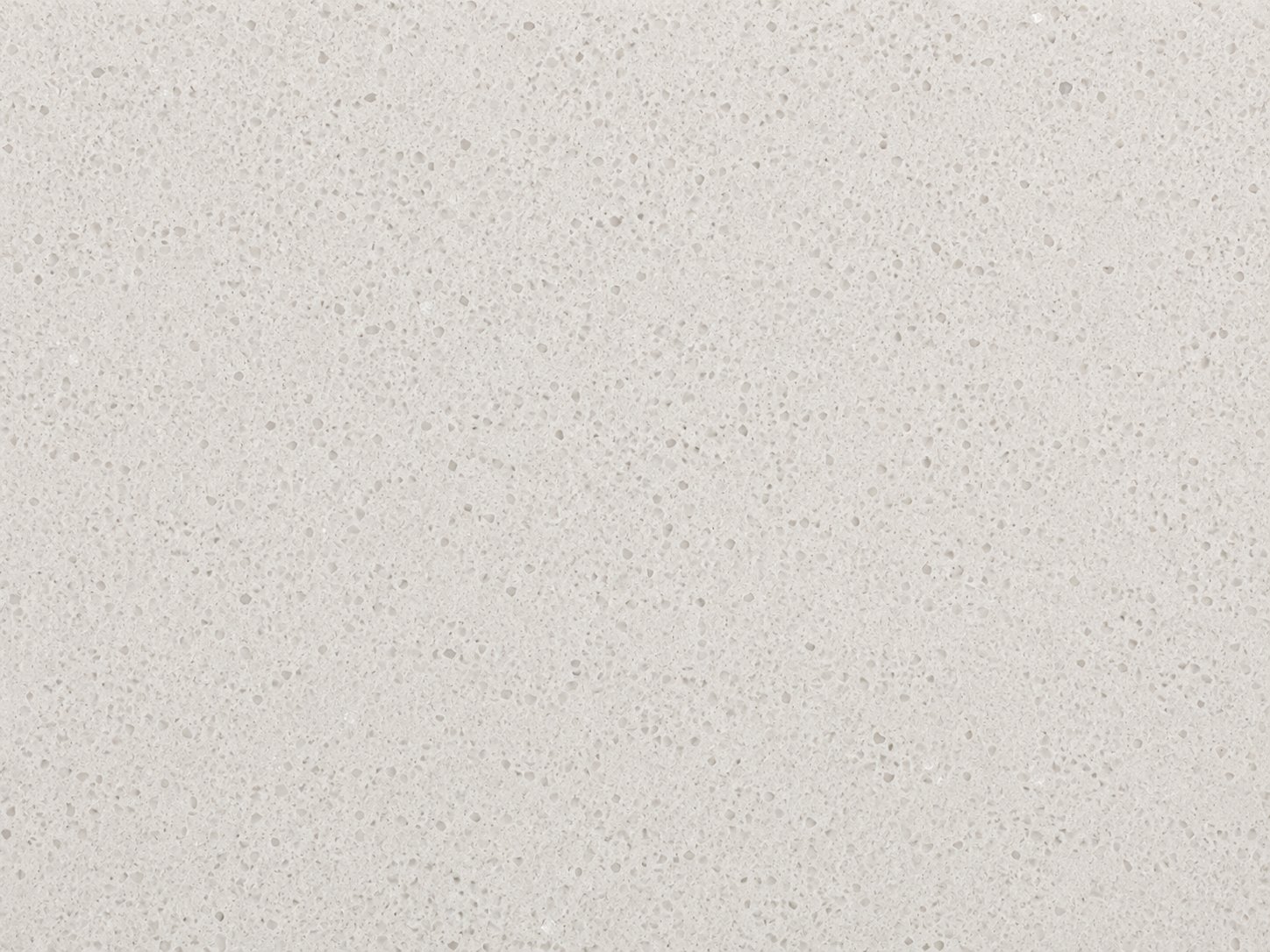
Quartz slab close-up — Elite Tile & Stone
In Your Home

How Quartz
Performs

Engineered quartz is non-porous — it does not require sealing and resists staining well. It does not etch from household acids. It is very hard and scratch-resistant. Its limitations: the resin component can be damaged by strong chemicals, heat, and UV exposure. It cannot be polished back to its original finish if the surface is damaged — the resin does not respond the same way natural stone does to diamond abrasives.

Our Restoration Approach

Engineered quartz has more limited restoration options than natural stone. Surface scratches and chips can be filled and repaired. Dull or hazy surfaces caused by cleaning product residue can often be addressed with appropriate chemistry. However, if the resin surface has been physically damaged — etched by strong chemicals or burned by heat — the restoration options are more limited than with natural stone. We assess quartz surfaces honestly and advise on what is achievable.

How to Care for It

Quartz Maintenance Tips

Proper care extends the life of your quartz significantly and reduces the frequency of professional restoration.

Restoration Services

We Restore Quartz
Throughout North Idaho

If you have quartz in your home or commercial property in Coeur d'Alene, Hayden, Post Falls, or Rathdrum — we can assess and restore it.

Have Quartz That
Needs Attention?

Free in-home assessment — we'll evaluate your quartz and tell you exactly what we can do.

Get a Free Quote
Common Questions

Quartz Questions

No. Quartz is engineered — ground natural quartz bound with resin and pigment. It's non-porous, very consistent in pattern, and doesn't require sealing. It's not the same as quartzite, which is natural stone.
Quartz is more limited than natural stone for restoration because the resin binder responds differently to abrasives and heat. Light surface issues can sometimes be improved, and chips can be filled, but quartz cannot be re-honed and re-polished the way natural stone can. We assess honestly what's achievable.
Quartz can be damaged by heat (the resin scorches), harsh chemicals, or UV exposure near windows. Unlike natural stone, this damage often can't be fully polished out. Prevention — trivets, gentle cleaners — matters more with quartz.
Quartz resists staining well due to its non-porous surface and doesn't etch from acids like marble does. Its main vulnerabilities are heat and certain harsh chemicals. Use mild cleaners and always use trivets.
Free Quote

Request Your Free Quote

Tell us what you need restored — we respond within a few hours. No pressure, no obligation.

Or call 208-449-9455 — Mon–Sat 7am–5pm.

Get a Free QuoteFill out the form
Call 208-449-9455Talk to us now
📞